

Can a pvc window welding machine be used for welding PVC profiles with different densities?
Hey there! As a supplier of PVC window welding machines, I often get asked a bunch of questions about our products. One of the most common queries I hear is, "Can a PVC window welding machine be used for welding PVC profiles with different densities?" Well, let's dive right into this topic and find out.
First off, let's understand what PVC profiles with different densities are all about. PVC, or polyvinyl chloride, is a widely used plastic material in the window manufacturing industry. Different applications and requirements call for PVC profiles with varying densities. Higher density PVC profiles are generally more rigid and durable, while lower density ones might be more flexible and lightweight.
Now, when it comes to using a PVC window welding machine for profiles of different densities, the short answer is yes, it's usually possible. But, there are some important factors to consider.
1. Temperature Control
Temperature is a crucial factor in the welding process. Different density PVC profiles have different melting points. A higher density PVC profile will typically require a higher welding temperature to achieve a proper fusion. Most modern PVC window welding machines come with adjustable temperature settings. This feature allows operators to fine - tune the temperature according to the density of the PVC profile they are working with.

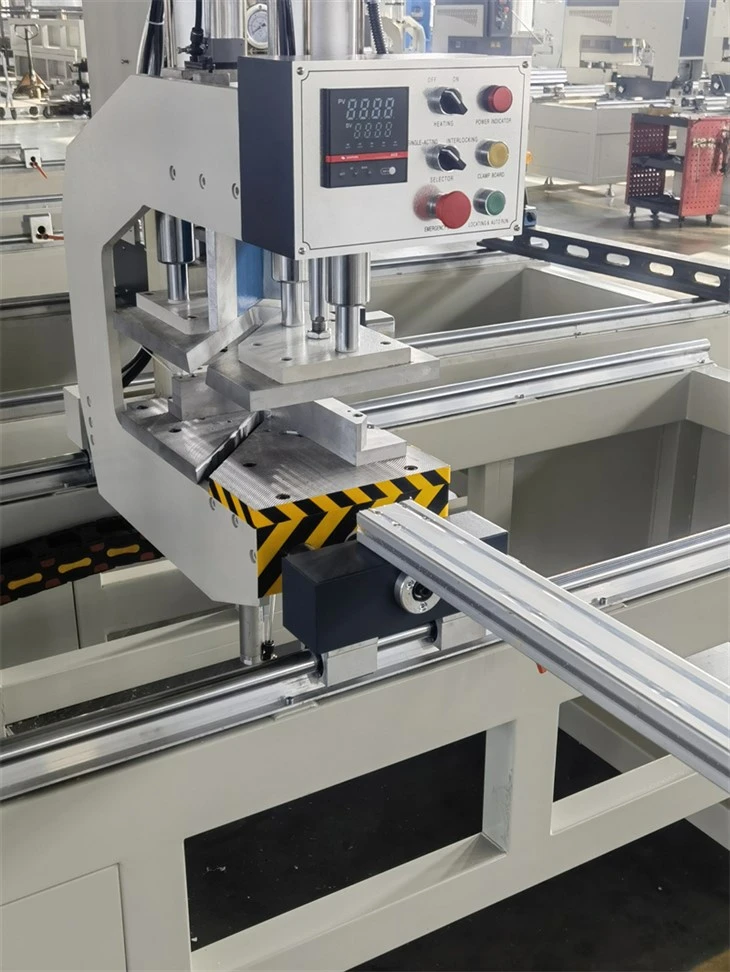
For example, if you're welding a high - density PVC profile, you might need to set the welding temperature around 230 - 250 degrees Celsius. On the other hand, a lower density PVC profile could be welded at a temperature of around 200 - 220 degrees Celsius. If the temperature is too low, the welding won't be strong enough, and the joint might break easily. If it's too high, the PVC could get over - melted, leading to a messy and weak weld.
2. Pressure Settings
Pressure also plays a significant role in the welding process. When welding PVC profiles, the right amount of pressure needs to be applied to ensure a tight and strong bond. PVC profiles with different densities have different levels of resistance to pressure.
Higher density profiles can generally withstand more pressure during welding. So, when using a PVC window welding machine, you may need to increase the pressure settings for high - density profiles. Conversely, lower density profiles require less pressure. If too much pressure is applied to a low - density profile, it could deform or crack during the welding process.
3. Welding Speed
The speed at which the welding is done is another important aspect. Different density PVC profiles have different heat transfer rates. Higher density profiles conduct heat more slowly than lower density ones.
This means that when welding a high - density PVC profile, you might need to slow down the welding speed to allow enough time for the heat to penetrate and melt the material properly. For lower density profiles, a faster welding speed can be used as they heat up more quickly.
Our Range of PVC Window Welding Machines
At our company, we offer a variety of PVC window welding machines that are designed to handle PVC profiles of different densities. For instance, our UPVC Corner Welding Machine is a great option for creating strong and precise corner joints in PVC windows. It has adjustable temperature, pressure, and speed settings, which makes it suitable for welding profiles of various densities.
Another machine in our lineup is the UPVC Seamless Welding Machine. This machine is ideal for achieving seamless welds in PVC profiles. Whether you're working with high - density or low - density profiles, it can be adjusted to meet your specific welding requirements.
And if you're looking for a more comprehensive solution, our PVC Window Welding and Corner Cleaning Line is the way to go. It combines the welding process with corner cleaning, providing a one - stop solution for PVC window production.
Testing and Quality Assurance
Before starting a large - scale production with PVC profiles of different densities, it's always a good idea to conduct some test welds. This will help you determine the optimal temperature, pressure, and speed settings for each type of profile.
You can take a few sample profiles and perform test welds using different settings on your PVC window welding machine. Then, you can inspect the welds for strength, appearance, and other quality parameters. By doing this, you can ensure that your production process is efficient and that the final products meet the required quality standards.
Conclusion
In conclusion, a PVC window welding machine can indeed be used for welding PVC profiles with different densities. However, it requires careful adjustment of temperature, pressure, and welding speed settings. At our company, we're committed to providing high - quality PVC window welding machines that can handle a wide range of PVC profiles.
If you're in the market for a PVC window welding machine or have any questions about welding PVC profiles of different densities, don't hesitate to reach out to us. We're here to help you make the right choice for your window manufacturing needs. Let's start a conversation and see how we can work together to take your PVC window production to the next level.
References
- "Plastics Processing Handbook" - A comprehensive guide on plastic processing techniques, including PVC welding.
- Industry reports on PVC window manufacturing and the use of welding machines.