

Can an insulating glass machine produce insulating glass with a low - emissivity coating?
As a seasoned supplier of insulating glass machines, the question "Can an insulating glass machine produce insulating glass with a low-emissivity coating?" is one that I encounter frequently. In this blog post, I'll delve into the technical aspects, feasibility, and implications of using an insulating glass machine for creating low-emissivity coated insulating glass.
Understanding Insulating Glass and Low-Emissivity Coating
Before we explore the production process, it's essential to understand what insulating glass and low-emissivity coatings are. Insulating glass, commonly known as double-glazed or triple-glazed glass, consists of two or more glass panes separated by a spacer and sealed at the edges. The space between the panes is usually filled with dry air or an inert gas like argon, which helps to reduce heat transfer and improve thermal insulation.
On the other hand, a low-emissivity (low-e) coating is a microscopically thin, virtually invisible, metal or metallic oxide layer deposited on the surface of the glass. This coating reflects infrared radiation, reducing the amount of heat that can pass through the glass. Low-e coatings can significantly enhance the energy efficiency of windows and doors, making them an attractive option for both residential and commercial buildings.
The Capability of Insulating Glass Machines
Modern insulating glass machines are designed to perform a variety of tasks, including glass cutting, edge cleaning, spacer application, gas filling, and sealing. These machines are highly automated and can produce insulating glass units of different sizes, shapes, and configurations with high precision and efficiency.

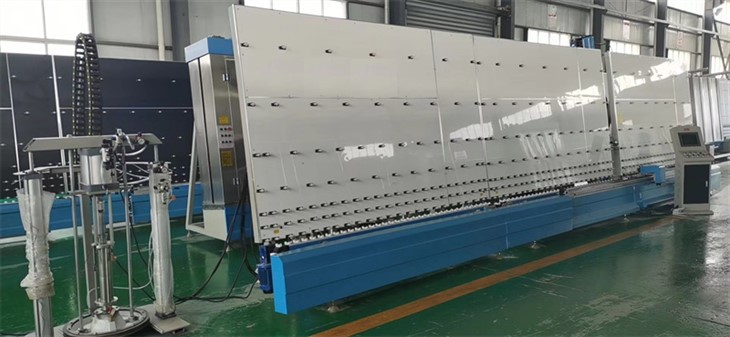
When it comes to producing insulating glass with a low-e coating, the key lies in the compatibility between the insulating glass machine and the low-e glass. Most modern insulating glass machines are compatible with low-e glass, as long as the low-e coating is properly handled during the production process. The machines are equipped with features such as soft-touch rollers and gentle handling systems to prevent damage to the delicate low-e coating.
The Production Process of Low-Emissivity Coated Insulating Glass
The production process of low-emissivity coated insulating glass involves several steps, which can be carried out using an insulating glass machine. Here's a step-by-step overview of the process:
- Glass Cutting: The first step is to cut the glass panes to the desired size and shape. The insulating glass machine uses a cutting head to score the glass surface and then breaks it along the scored line. It's crucial to ensure that the cutting process is precise to avoid any glass chips or cracks that could damage the low-e coating.
- Edge Cleaning: After cutting, the edges of the glass panes need to be cleaned to remove any dirt, dust, or debris. The insulating glass machine uses a brushing system or a water jet to clean the edges thoroughly. Proper edge cleaning is essential to ensure a good seal between the glass panes and the spacer.
- Spacer Application: The spacer is then applied to the edges of one of the glass panes. The spacer is a thin strip of material, usually made of aluminum, that separates the two glass panes and provides a channel for the gas filling. The insulating glass machine applies the spacer automatically, ensuring a uniform and precise application.
- Gas Filling: The space between the two glass panes is then filled with dry air or an inert gas like argon. The insulating glass machine uses a gas filling system to fill the space with the desired gas. The gas filling process helps to improve the thermal insulation performance of the insulating glass unit.
- Sealing: The final step is to seal the edges of the two glass panes together. The insulating glass machine uses a sealing system to apply a sealant, such as butyl rubber or polysulfide, to the edges of the glass panes. The sealant helps to prevent air and moisture from entering the space between the glass panes, ensuring the long-term performance of the insulating glass unit.
Advantages of Using an Insulating Glass Machine for Low-Emissivity Coated Insulating Glass
Using an insulating glass machine to produce low-emissivity coated insulating glass offers several advantages:
- High Efficiency: Insulating glass machines are highly automated, which means they can produce a large number of insulating glass units in a short period of time. This helps to improve productivity and reduce production costs.
- Consistent Quality: The use of an insulating glass machine ensures consistent quality in the production of low-emissivity coated insulating glass. The machine can control the processing parameters, such as cutting dimensions, spacer application, gas filling, and sealing, with high precision, resulting in uniform and reliable product quality.
- Versatility: Insulating glass machines can produce insulating glass units of different sizes, shapes, and configurations. This allows for greater flexibility in meeting the specific requirements of different projects.
- Cost-Effectiveness: By using an insulating glass machine, manufacturers can reduce labor costs and improve production efficiency. This, in turn, can lead to cost savings in the long run.
Recommended Insulating Glass Machines
If you're interested in producing low-emissivity coated insulating glass, I recommend checking out the following Automatic Insulating Glass Production Line. This state-of-the-art production line is designed to produce high-quality insulating glass units with low-e coatings efficiently and effectively.
Another great option is the Automatic Insulating Glass Making Machine Production Line. This production line is equipped with advanced features and technologies, ensuring precise and stable operation during the production process.
For those looking for high-speed processing, the High-Speed Insulating Glass Processing Equipment Precision Double Glazing Maker is an excellent choice. It can significantly increase production efficiency without compromising on product quality.
Conclusion
In conclusion, an insulating glass machine can indeed produce insulating glass with a low-emissivity coating. With the right equipment and proper handling techniques, manufacturers can produce high-quality, energy-efficient low-emissivity coated insulating glass units that meet the demands of the market. If you're considering investing in an insulating glass machine for the production of low-e coated insulating glass, I encourage you to reach out to us for more information and to discuss your specific requirements. We're here to help you make the right decision and ensure the success of your production operations.
References
- Glass Association of North America. (2023). Insulating Glass: A Technical Overview.
- International Window Film Association. (2023). Low-Emissivity Coatings: How They Work.