

How to adjust the cutting angle of an aluminum profile cutting saw?
Hey there! As a supplier of aluminum profile cutting saws, I often get asked about how to adjust the cutting angle of these machines. It's a crucial skill, especially if you want to get precise cuts for your aluminum profiles. In this blog, I'll walk you through the steps to adjust the cutting angle of an aluminum profile cutting saw, and I'll also share some tips and tricks along the way.
First off, let's talk about why adjusting the cutting angle is so important. Different projects require different angles for cutting aluminum profiles. Whether you're making windows, doors, or other aluminum structures, getting the right angle is key to ensuring a perfect fit. A small error in the cutting angle can lead to parts not fitting together properly, which can cause delays and extra costs in your project.
Now, let's dive into the steps to adjust the cutting angle.
Step 1: Know Your Machine
Before you start adjusting the cutting angle, you need to understand your aluminum profile cutting saw. Different models have different ways of adjusting the angle. Some saws have a digital display that shows the current angle, while others rely on manual markings. Make sure you read the user manual that came with your saw to familiarize yourself with its features and how to adjust the angle.
We offer a variety of high - quality aluminum profile cutting saws, such as the CNC Aluminum Cutting Center, the Precision Double Head Miter Saw, and the CNC Ultra Wide Cutting Saw. Each of these models has its own unique features for angle adjustment.
Step 2: Prepare the Saw
Safety first! Before you start making any adjustments, turn off the saw and unplug it from the power source. This will prevent any accidental starts that could cause injury. Also, make sure the saw blade is clean and in good condition. A dull or dirty blade can affect the quality of the cut and make it harder to get an accurate angle.
Step 3: Loosen the Angle Lock
Most aluminum profile cutting saws have an angle lock mechanism that keeps the saw at a fixed angle. Locate this lock and loosen it. On some saws, it might be a lever that you need to pull, while on others, it could be a screw that you need to turn counter - clockwise. Once the lock is loose, you should be able to move the saw head to adjust the angle.
Step 4: Set the Desired Angle
Now comes the important part. Decide on the angle you need for your project. If your saw has a digital display, you can simply input the desired angle using the control panel. If it's a manual system, use the markings on the saw's base or angle scale to align the saw head with the correct angle. Make sure you double - check the angle to ensure accuracy. You can use a protractor or an angle gauge to verify the setting.
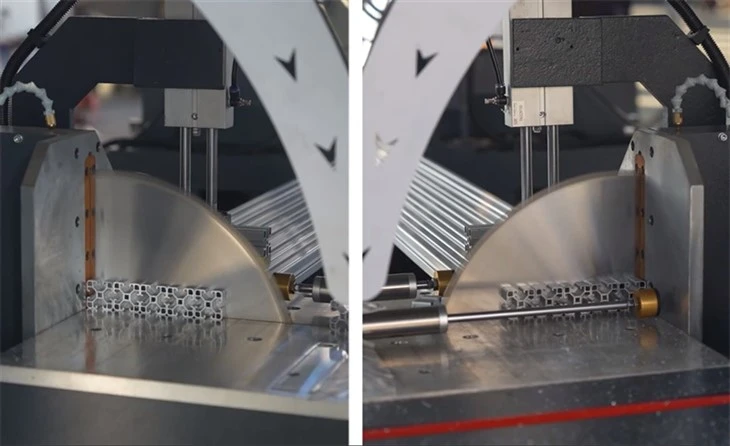

Step 5: Tighten the Angle Lock
Once you've set the desired angle, tighten the angle lock to secure the saw head in place. Make sure it's tightened firmly so that the saw head won't move during the cutting process. A loose lock can cause the angle to change while cutting, resulting in an inaccurate cut.
Step 6: Test the Cut
Before you start cutting your actual aluminum profiles, it's a good idea to make a test cut on a scrap piece of aluminum. This will allow you to check if the angle is correct and if the cut quality is satisfactory. If the angle is off, repeat steps 3 - 5 until you get it right.
Tips and Tricks
- Use a Zero - Point Calibration: Some advanced saws allow you to perform a zero - point calibration. This helps to ensure that the saw's angle readings are accurate. Follow the instructions in your user manual to perform this calibration regularly.
- Keep the Workpiece Secure: Make sure the aluminum profile is properly secured on the saw's worktable. A loose workpiece can move during the cutting process, affecting the angle and the quality of the cut. Use clamps or other securing devices to hold the profile in place.
- Take Your Time: Adjusting the cutting angle requires patience and precision. Rushing through the process can lead to mistakes. Take your time to set the angle correctly and double - check your work.
Common Problems and Solutions
- Inaccurate Angle Readings: If you're getting inaccurate angle readings, it could be due to a dirty or damaged angle scale. Clean the scale with a soft cloth and check for any signs of damage. If the problem persists, you might need to have the saw calibrated by a professional.
- Difficulty in Moving the Saw Head: If you're having trouble moving the saw head to adjust the angle, it could be because the angle lock is not fully loosened or there's some debris blocking the movement. Check the lock and clean the area around the saw head to remove any debris.
In conclusion, adjusting the cutting angle of an aluminum profile cutting saw is a skill that can be mastered with practice. By following these steps and tips, you'll be able to get accurate cuts for your aluminum profile projects.
If you're in the market for a new aluminum profile cutting saw or need more information about our products, don't hesitate to reach out to us. We're here to help you find the right saw for your needs and provide you with all the support you need to get the most out of your machine. Whether you're a small - scale DIY enthusiast or a large - scale manufacturing company, we have the perfect solution for you. Contact us today to start a conversation about your aluminum profile cutting needs!
References
- Manufacturer's user manuals for aluminum profile cutting saws
- Industry best practices for aluminum profile cutting