

Can a corner crimping machine be used for composite material corners?
Hey there! As a supplier of corner crimping machines, I often get asked if our machines can be used for composite material corners. Well, let's dive right into this topic and find out.
First off, let's understand what composite materials are. Composite materials are made by combining two or more different materials with different physical or chemical properties. These new materials have characteristics that are superior to the individual components. For example, fiberglass is a composite made of glass fibers and a resin matrix. It's lightweight, strong, and resistant to corrosion. Carbon fiber composites are another popular type, known for their high strength - to - weight ratio and excellent stiffness.
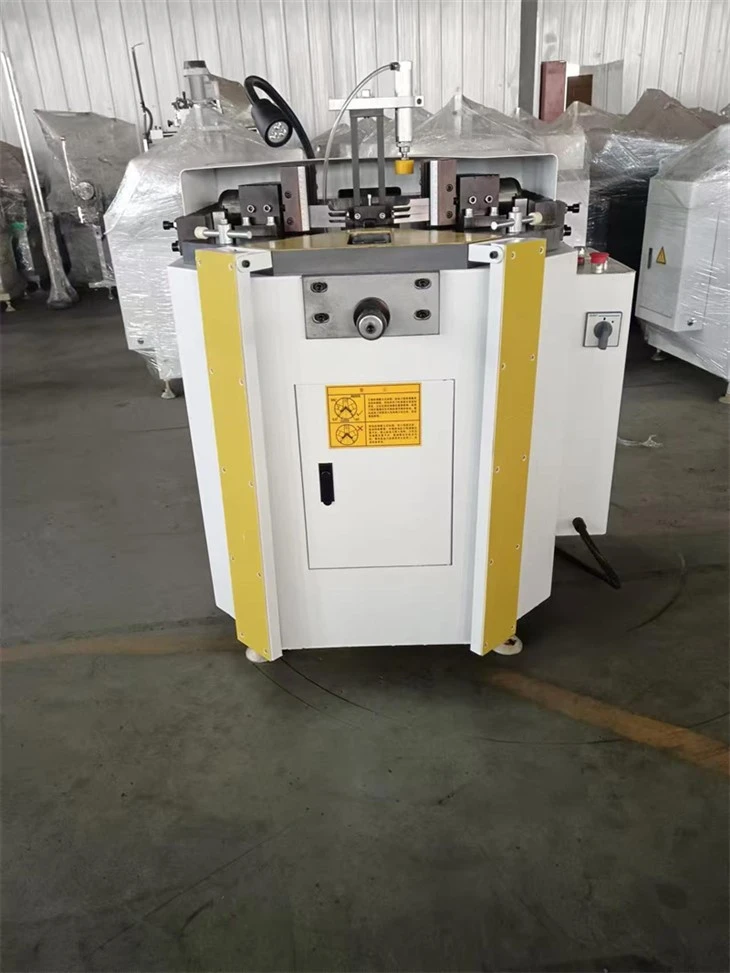
Now, let's talk about corner crimping machines. We offer a variety of them, like the Aluminum Corner Crimping Machine. This machine is mainly designed for aluminum profiles, but the question is, can it handle composite materials?
The working principle of a corner crimping machine is to apply pressure to the corners of a profile to join them together. When it comes to composite materials, there are a few factors we need to consider.
Compatibility of Materials
Composite materials have different mechanical properties compared to metals like aluminum. They can be more brittle in some cases, especially if they contain fibers. When a corner crimping machine applies pressure, there's a risk of cracking or delamination of the composite layers. Delamination occurs when the layers of the composite material separate from each other, which can significantly reduce the strength and integrity of the corner joint.
However, not all composite materials are the same. Some composites with a more flexible resin matrix might be more suitable for corner crimping. For instance, composites used in automotive interiors or some consumer products are designed to be more ductile. Our Automatic Aluminum Corner Crimping Machine might be able to handle these types of composites with some adjustments.
Machine Adjustments
To use a corner crimping machine for composite material corners, adjustments are often necessary. The pressure applied by the machine is a crucial factor. Our Adjustable Pressure High - Speed Corner Crimping Machine comes in handy here. With its adjustable pressure feature, we can reduce the force exerted on the composite material to prevent damage.
The speed of the crimping process also matters. A slower speed can give the composite material more time to deform without causing sudden stress that could lead to cracking. Additionally, the shape and design of the crimping dies need to be considered. Specialized dies might be required to ensure a proper and secure joint for composite materials.
Testing and Validation
Before using a corner crimping machine for large - scale production of composite material corners, it's essential to conduct some tests. We can start with small - scale samples of the composite material. Test different pressure settings and crimping speeds to find the optimal combination that results in a strong and undamaged corner joint.
We can also perform quality control tests on the crimped corners. This can include visual inspections for cracks or delamination, as well as mechanical tests to measure the strength of the joint. By doing these tests, we can determine if our corner crimping machines are suitable for the specific composite material in question.
Advantages of Using Corner Crimping Machines for Composites
If we can successfully use a corner crimping machine for composite material corners, there are several advantages. One of the main benefits is efficiency. Crimping is a relatively fast process compared to other joining methods like gluing or mechanical fastening with screws. This can lead to higher production rates and lower costs in the long run.
Another advantage is the consistency of the joints. A corner crimping machine can produce uniform joints, which is important for maintaining the quality and performance of the final product. Whether it's a window frame or a structural component, consistent joints ensure that the product meets the required standards.
Challenges and Limitations
Despite the potential advantages, there are still challenges and limitations. As mentioned earlier, the risk of damage to the composite material is a major concern. Some composite materials might require additional surface treatments or pre - processing before crimping to improve the bonding and reduce the risk of damage.

The cost of modifying the machine and developing specialized dies for composite materials can also be a barrier. This might not be feasible for small - scale production or for companies with a limited budget.
Conclusion
So, can a corner crimping machine be used for composite material corners? The answer is, it depends. With the right adjustments, proper testing, and consideration of the specific composite material, it's possible to use our corner crimping machines for composite applications.
If you're interested in exploring the possibility of using our corner crimping machines for your composite material projects, we'd love to have a chat. Our team of experts can help you determine the best approach, make the necessary adjustments to the machine, and ensure that you get the most out of our products. Whether you need an Aluminum Corner Crimping Machine, an Automatic Aluminum Corner Crimping Machine, or an Adjustable Pressure High - Speed Corner Crimping Machine, we're here to support you.
Don't hesitate to reach out to us for more information and to start a discussion about your specific needs. Let's work together to find the best solution for your composite material corner joining requirements.
References
- Callister, W. D., & Rethwisch, D. G. (2011). Materials Science and Engineering: An Introduction. Wiley.
- Ashby, M. F., & Jones, D. R. H. (2012). Engineering Materials 1: An Introduction to Properties, Applications and Design. Butterworth - Heinemann.