

Are there any special requirements for the working environment of a Pvc V Cutting Machine?
As a supplier of PVC V Cutting Machines, I've had numerous discussions with customers about the machine's performance, features, and, importantly, its working environment. A proper working environment is crucial for the efficient and long - term operation of any industrial equipment, and the PVC V Cutting Machine is no exception. In this blog, I'll explore the special requirements for the working environment of a PVC V Cutting Machine.
Temperature and Humidity
One of the primary factors to consider is the temperature of the working area. PVC V Cutting Machines are typically made of metal components and have electrical systems. Extreme temperatures can have a significant impact on both the mechanical and electrical parts.
In high - temperature environments, the metal parts of the machine may expand. This expansion can lead to misalignments in the cutting mechanisms, resulting in inaccurate cuts. The electrical components are also sensitive to heat. High temperatures can cause the insulation of wires to degrade faster, increasing the risk of short - circuits and electrical failures. On the other hand, low temperatures can make the metal parts brittle, increasing the likelihood of cracks and breakages.
A recommended temperature range for the operation of a PVC V Cutting Machine is between 10°C and 35°C (50°F and 95°F). This range ensures that the machine's components remain within their optimal operating conditions.
Humidity is another critical environmental factor. High humidity can lead to corrosion of the metal parts of the machine. The cutting blades, in particular, are vulnerable to rusting, which can affect the quality of the cuts and reduce the lifespan of the blades. Moisture can also seep into the electrical components, causing malfunctions. A relative humidity level of 40% - 60% is considered ideal for the operation of a PVC V Cutting Machine. To maintain these conditions, it may be necessary to install climate - control systems such as air conditioners and dehumidifiers in the workshop.
Ventilation
Proper ventilation is essential in the working area of a PVC V Cutting Machine. During the cutting process, PVC profiles generate dust and fumes. These dust particles can be harmful if inhaled by the operators, leading to respiratory problems. Moreover, the accumulation of dust on the machine's components can cause mechanical failures. For example, dust can get into the moving parts of the machine, such as the bearings and gears, increasing friction and wear.
Fumes generated during the cutting process may contain volatile organic compounds (VOCs) and other harmful substances. Adequate ventilation helps to remove these dust particles and fumes from the working area, ensuring a safe and healthy environment for the operators. It is recommended to install exhaust fans or ventilation systems that can effectively remove the contaminants from the air. The ventilation system should be designed to provide a sufficient air exchange rate, typically at least 6 - 8 air changes per hour.
Floor and Space
The floor on which the PVC V Cutting Machine is placed must be stable and level. An uneven floor can cause the machine to vibrate during operation, which can affect the accuracy of the cuts and also lead to premature wear of the machine's components. The floor should also be able to support the weight of the machine. If the floor is too weak, it may sag over time, causing misalignments in the machine.
In terms of space, the working area around the PVC V Cutting Machine should be spacious. The machine needs enough room for the operators to move around safely and perform their tasks. There should also be sufficient space for the storage of PVC profiles and other materials. A general rule of thumb is to have at least 1 - 2 meters of clearance around the machine on all sides. This space allows for easy access to the machine for maintenance and repair work.
Power Supply
The PVC V Cutting Machine requires a stable and reliable power supply. Fluctuations in the power supply can cause damage to the electrical components of the machine. Voltage spikes can burn out the circuit boards, while voltage drops can cause the machine to malfunction or stop working altogether.
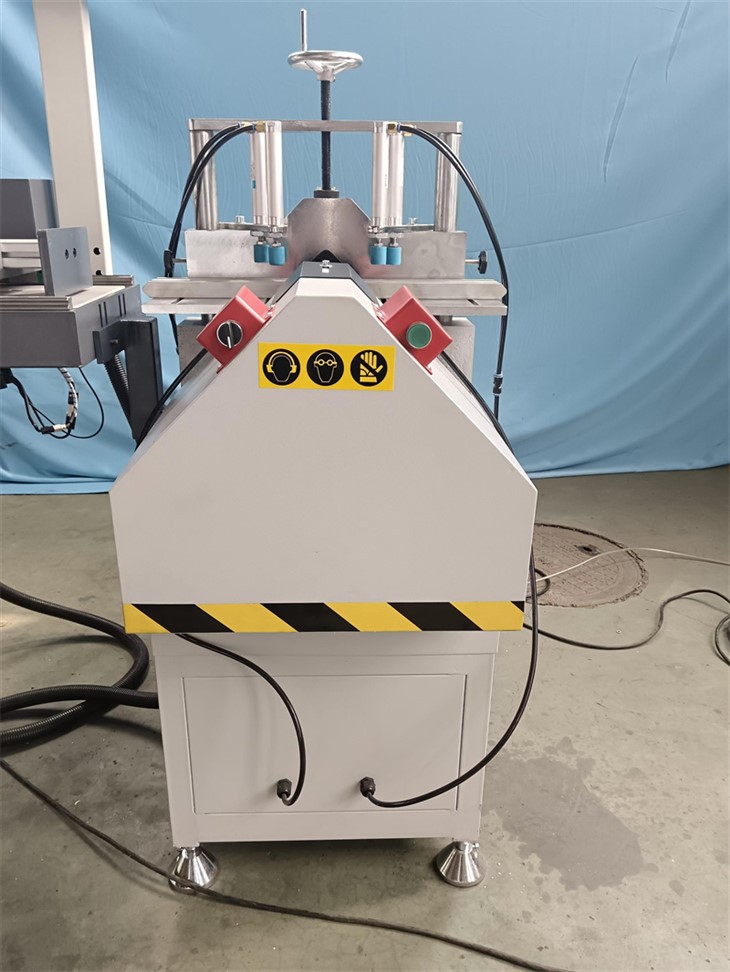

It is recommended to use a dedicated power line for the PVC V Cutting Machine. This line should be properly grounded to prevent electrical shocks and protect the machine from electrical surges. The power supply should also be within the voltage and frequency specifications of the machine. Most PVC V Cutting Machines operate at a voltage of 220V or 380V and a frequency of 50Hz or 60Hz. Using a voltage stabilizer can help to ensure a consistent power supply.
Noise and Vibration
The operation of a PVC V Cutting Machine can generate significant noise and vibration. Excessive noise can be a nuisance to the operators and may also cause hearing damage over time. Vibration can affect the accuracy of the cuts and also cause wear and tear on the machine's components.
To reduce noise, it may be necessary to install sound - absorbing materials in the workshop. These materials can help to dampen the sound waves generated by the machine. Anti - vibration pads can be used to reduce the vibration transmitted from the machine to the floor. These pads absorb the shock and vibrations, ensuring a more stable operation of the machine.
Compatibility with Other Equipment
In many workshops, the PVC V Cutting Machine is used in conjunction with other equipment such as Glazing Bead Cutting Saw and Professional Glazing Bead Cutting Saw. The working environment should be designed to accommodate the operation of all these machines.
For example, the layout of the workshop should be planned in such a way that there is no interference between the different machines. The ventilation system should be able to handle the dust and fumes generated by all the equipment. The power supply should also be sufficient to meet the requirements of all the machines.
Conclusion
In conclusion, the working environment of a PVC V Cutting Machine has several special requirements. Temperature, humidity, ventilation, floor and space, power supply, noise, and vibration, as well as compatibility with other equipment, all play important roles in ensuring the efficient and long - term operation of the machine.
If you are considering purchasing a PVC V Cutting Machine or need more information about its working environment requirements, please feel free to contact us for further discussion. We are committed to providing you with the best solutions for your PVC window - making needs.
References
- Industrial Machinery Handbook
- PVC Processing Technology Manual
- Occupational Safety and Health Guidelines for Machine Operators